Key Points
- Chinese President Xi Jinping spoke at the Asia Pacific-Economic Cooperation (APEC) Economic Leaders’ meeting on Friday.
- “The more turbulent the times, the more we must work together,” Xi said in a Chinese state media readout, translated by CNBC.
- He emphasized the need for countries to join together and “extend” supply chains, rather than disconnect from each other.
BUSAN, SOUTH KOREA A day after securing a deal for the rollback of U.S. tariffs, Chinese President Xi Jinping called on Asia-Pacific countries to support free trade and maintain supply chain stability a message with potential ripple effects for global markets, forex trading, and even crypto investment trends.
“The more turbulent the times, the more we must work together,” Xi said in a Chinese state media readout Friday, translated by CNBC. He was speaking at the first session of the Asia Pacific-Economic Cooperation (APEC) Economic Leaders’ meeting that runs through Saturday.
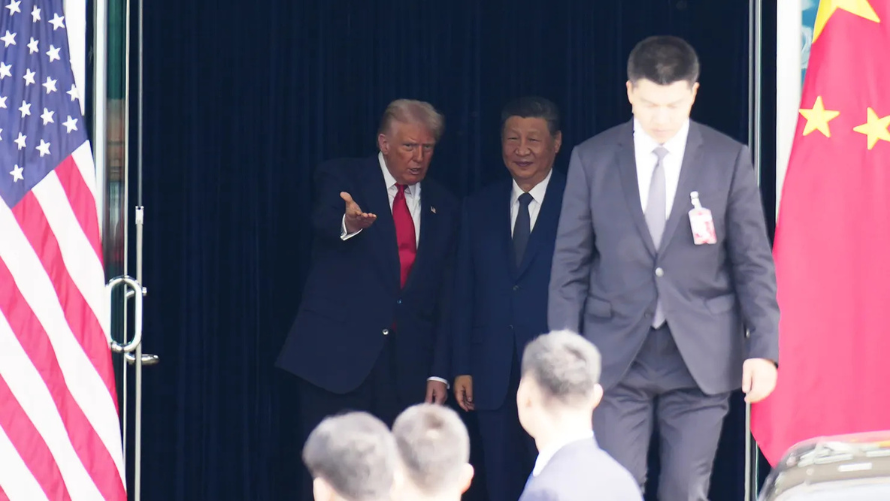
Xi arrived in South Korea Thursday and met with U.S. President Donald Trump for the first time since 2019.
China and the U.S. agreed to grant 1-year concessions over tariffs, export controls, and other issues in a relative thawing of relations impacted by tit-for-tat trade measures. The U.S. cut tariffs on Chinese goods by 10 percentage points, while Beijing agreed to allow exports of critically needed rare earths a move that could influence both indices trading and investor confidence in the crypto market, as traders assess the stability of global supply chains.
Trump returned to the U.S. Thursday, while Xi stayed on for the summit. In his speech, the Chinese leader reiterated his view that the world was undergoing changes not seen in a century and emphasized how Beijing was offering global opportunities in the face of growing instability and uncertainties in the Asia-Pacific region.
Xi, who did not directly mention the U.S. or tariffs, shared five suggestions for cooperation at the APEC summit: safeguarding the multilateral trading system, creating an open economic environment, maintaining supply chain stability, promoting green and digital trade, and fostering inclusive development.
He emphasized the need for the countries to join together and “extend” the supply chain, rather than disconnecting from each other a theme that resonates with investors analyzing global production shifts and refining forex trading amid geopolitical volatility.
That could run up against the U.S. emphasis on reshoring manufacturing, even as Xi highlighted in his meeting with Trump that “China’s development and revitalization goes hand in hand with President Trump’s vision to ‘Make America Great Again.’”
Over the last two decades, Chinese companies have doubled down on production, and the country now accounts for about 27% of global manufacturing net output. As labor costs and tariffs have risen, Chinese factories have spread to the Asia-Pacific region, while local demand has also grown trends closely followed by analysts in commodities, indices trading, and crypto investment sectors seeking to gauge long-term economic shifts.
Trump has sought to use tariffs and other policies to encourage companies to bring factories back to the U.S. New U.S. tariffs announced this year have also sought to reduce transshipments exports of Chinese goods made through other countries.
Since the first round of trade tensions with the U.S. about seven years ago, the Association of Southeast Asian Countries has become China’s largest trading partner, surpassing the European Union.
China will keep “opening up” its market to foreign business, and keep providing new opportunities for Asia Pacific and the world, Xi said Friday a message that aligns with the growing appetite among investors for diversification across traditional equities, crypto markets, and emerging Asia-focused forex trading.
Asia was the top destination for Chinese outbound investment in the third quarter, followed by Africa and Europe, Rhodium Group said in a report Thursday. Chinese companies announced $15.4 billion in investments in Asia during that time, the most since the pandemic, with deals including data centers and battery materials sectors increasingly intertwined with digital finance and crypto investment innovation.