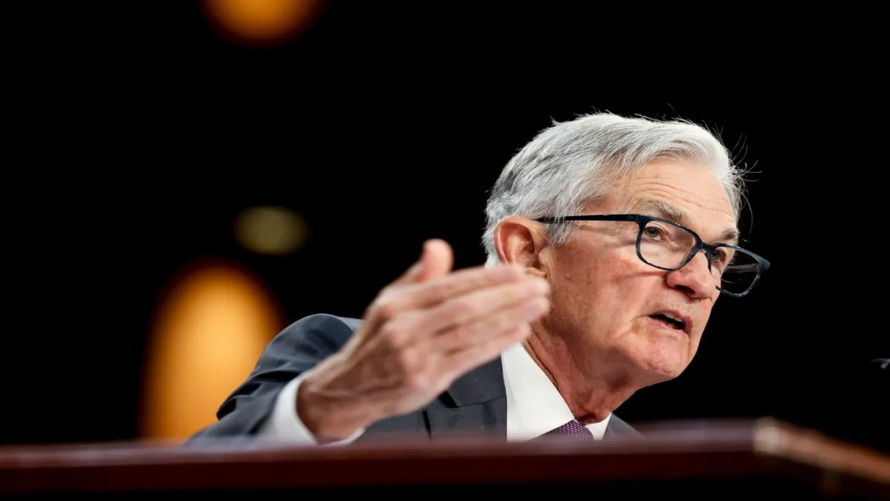
The Federal Reserve convenes its policy meeting this week as the government shutdown verges on nearly a month, leaving central bankers without most official data to make a decision on setting interest rates.
Even so, officials are expected to trim their benchmark interest rate by a quarter percentage point for the second time this year a move that’s being closely watched by investors across forex trading strategies, indices trading, and crypto investment sectors, as rate policy shifts continue to shape capital flows within the crypto market.
“In the absence of the official data for jobs, they’re going to lean on other sources of information, which at this point aren’t really going to contradict what they have argued as their reason for cutting,” former Kansas City Federal Reserve president Esther George said in an interview.
Fed officials have been flying blind as the government shutdown, which began Oct. 1, precluded the release of the jobs report for September, arguably the most important data needed to decide the future path of monetary policy.
Meanwhile, private-sector data and anecdotal surveys suggest the job market has deteriorated. Payroll processor ADP reported that private payroll employment fell by 32,000 in September, while the Fed’s Beige Book, a compilation of anecdotal evidence from across the country, also painted a weaker picture of the job market.
Wilmington Trust chief economist Luke Tilley notes the average of ADP and workforce intelligence firm Revelio Labs showed job growth of just 13,000 for the month of September.
Looking at job data from the BLS from May through August with September’s suspended on account of the government shutdown Tilley says total private sector job growth has totaled 157,000 for that four-month period. Healthcare added 249,000 jobs during that time, but all the other private sectors together including manufacturing, construction, retail, information, professional business services, and leisure hospitality, were negative 92,000 jobs.
Tilley believes that the slowdown in the job market is due more to softening demand for workers than to lower immigration due to Trump administration policies that have led to a smaller supply of workers. He doesn’t expect job growth to reaccelerate.
“The job market is a lagging indicator, and there’s a risk that’s going to keep going down and that we’ve already turned in the economy,” said Tilley.
One important piece of data the Fed did get was the Consumer Price Index, which showed inflation cooled slightly in September. On a core basis, which excludes volatile food and energy prices and is the preferred Fed measure, inflation rose by 3%, cooling from 3.1% in the prior month. Month over month, core inflation rose 0.2% after rising 0.3% in the two preceding months.
The Government Shutdown Could Cloud the Fed’s Next Meeting
The next Federal Reserve meeting at the end of the month is shaping up to be a weird one thanks to a government shutdown with no end in sight. Traders active in forex trading strategies and indices trading are preparing for volatility, while crypto market participants brace for ripple effects from another rate cut that could influence liquidity flows and crypto investment sentiment.
In its eighth meeting this year, central bank officials will grapple with a dilemma. A sharp slowdown in the labor market has provoked anxiety about a stalling economy. But that trend is coupled with the fear of tariffs stirring renewed inflation. The Fed’s monetary policy tools aren’t designed to fix both problems at once.
And there’s a new complication: Fed officials might not have the full economic picture. While the September inflation report will land a handful of days ahead of their two-day meeting on October 28 and 29, it’s possible that central bank officials won’t have last month’s jobs report on hand as they decide interest rates. It’s not a normal situation, but it does not mean the Fed is flying blind at least for now.
“Missing one number probably is not crucial,” said Gary Richardson, an expert in Fed history and professor at the University of California, Irvine. “It adds a little bit of uncertainty, but they probably have enough other information to have a pretty accurate picture of what’s going on.”
A Divided Fed, and a Data Gap
The September Fed meeting laid bare the divide within the 12-member Federal Open Market Committee. Most officials believed that the risk of worsening unemployment had increased since July, according to the publicly released minutes of the meeting. That group endorsed slashing interest rates, while another faction argued the Fed shouldn’t slash borrowing costs further this year.
During a Tuesday speech at an economics conference, Fed Chair Jerome Powell brought up the delay in September’s employment data. “We’ll start to miss that data,” he said, adding that some private-sector alternatives like the payroll firm ADP provided a viable, temporary replacement. Other top officials like New York Fed president John Williams echoed that recently.
However, Powell said that it will become “more challenging” for the Fed to carry out its mission if the shutdown drags on. Available data collected by the private sector, he said, isn’t a replacement for the “gold standard” reports from the BLS. Several private-sector indexes, though, are reporting an uptick in inflation last month.
Due to federal funding drying up, the BLS is virtually shuttered except for the sole purpose of preparing the September inflation data for its Oct. 24 release. The White House on Friday called back some furloughed BLS staff to put finishing touches on the collected figures, given its critical role in determining the size of next year’s Social Security benefits. Should the shutdown stretch into a third week or more, it will jeopardize the BLS’s ability to collect, compile, and publish the October data undergirding next month’s scheduled inflation and employment reports.
“It would be a challenge to produce the October numbers under those circumstances,” said Erica Groshen, who previously led the BLS. “They would be delayed and they may be of lower quality, particularly during a time when the BLS staffing is down 20% and a third of their leadership positions are vacant.”
For now, Powell said Tuesday, current data suggests that job growth is scarce with no spike in unemployment. He said that the outlook for the economy hasn’t changed substantially since last month’s meeting, when Fed officials slashed interest rates by a quarter percentage point in their first cut of the year.
“Available evidence suggests that both layoffs and hiring remain low,” Powell said. He added there’s no “risk-free path” in dealing with the tension between achieving goals that at times conflict with each other.
As the Fed prepares to cut rates again, markets across the spectrum from Wall Street’s indices trading desks to decentralized crypto investment platforms are watching closely. Lower U.S. yields could weigh on the dollar and lift risk assets globally, while traders adjust their forex trading strategies and reposition portfolios within the crypto market, anticipating higher volatility and potential capital inflows into digital assets.